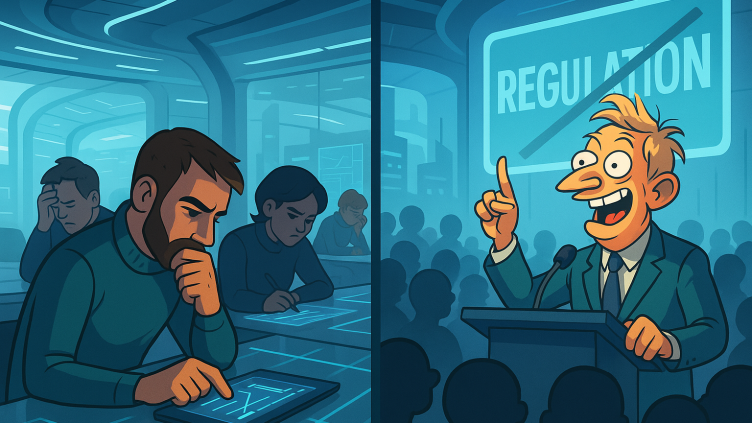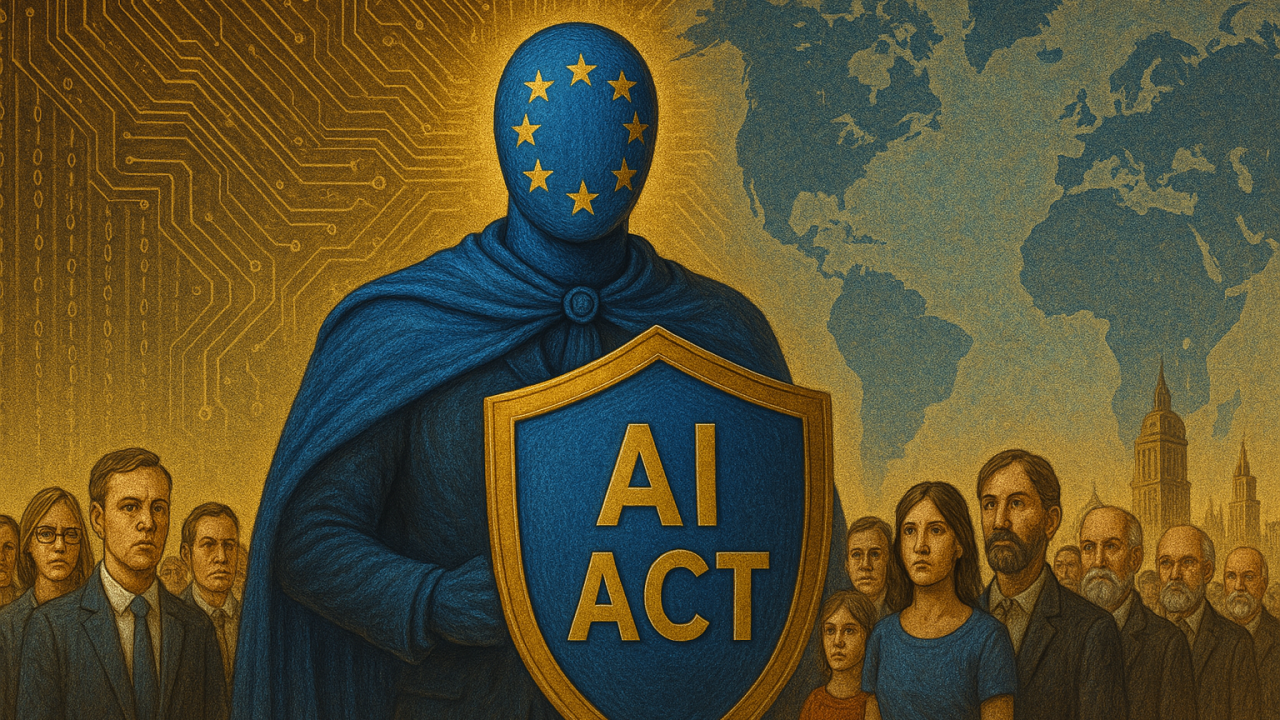
In recent months, the European Union's Artificial Intelligence Act (AI Act) has faced substantial criticism, much of it from individuals who seem to have barely skimmed its contents. Too often, discussions around the AI Act have focused solely on perceived drawbacks, neglecting the essential reasoning behind its careful design.
As someone who has taken the time to actually read the AI Act, I find it important to provide clarity and highlight why this piece of legislation, despite the criticism, is crucial and beneficial to society.
This article serves as a comprehensive guide to the AI Act, explaining its key provisions, impacts, and the essential role it will play in shaping the AI ecosystem in Europe and globally. My goal is to demonstrate how the Act achieves a critical equilibrium: robustly safeguarding fundamental rights and societal values without unnecessarily hindering the innovative spirit vital to technological progress and economic growth.
Let's move forward, step by step, in understanding what makes the AI Act necessary, timely, and ultimately positive for Europe and beyond.
1. The Main Objectives of the AI Act: Why Europe Needed a Regulatory Framework for AI
The AI Act was introduced by the European Commission to address a central challenge: enabling AI innovation while protecting society from its potential harms. With AI impacting everything from fundamental rights to public safety, the Act aims to guide development responsibly, without stifling progress. Its main objectives are:
Ensuring Safety and Fundamental Rights: The Act prohibits harmful practices like social scoring and manipulative AI to safeguard privacy, safety, and non-discrimination.Mitigating Risks from AI: By categorizing systems into four risk levels: unacceptable, high, limited, and minimal, the Act ensures regulation is proportionate to potential harm.Promoting Trust and Transparency: Providers must disclose when users are interacting with AI, label AI-generated content, and document system behavior to build accountability and public trust.Supporting Innovation with Clarity: Rather than block innovation, the Act offers clear rules, regulatory sandboxes, and simplified processes to help especially SMEs navigate compliance.Effective Governance and Oversight: New structures like the European AI Office will enforce rules, ensure consistency across member states, and keep pace with evolving technologies.
2. Who Helped Shape the AI Act?
Drafting the AI Act was a collaborative process involving a wide range of European stakeholders. Far from being a top-down bureaucratic effort, the Act reflects input from regulators, industry, civil society, and academia.
Regulators and EU Institutions: The European Commission led the process, with the European Parliament and Council refining the Act through negotiations to ensure a balanced, workable framework.Industry Players: Tech giants like Microsoft, Google, and Meta, alongside startups like Mistral AI, helped shape the Act to ensure it was technically realistic. SMEs also had a voice, resulting in tailored provisions to ease their compliance.Civil Society: Groups like Amnesty International and EDRi pushed for stronger protections around privacy, transparency, and non-discrimination, helping embed human rights at the core of the Act.Academia and Think Tanks: Policy input from universities and think tanks ensured the Act reflected ethical and scientific best practices.Standardization Bodies: Organizations like CEN/CENELEC contributed technical definitions and standards essential for consistent implementation across the EU.
This inclusive drafting process gave the AI Act its strength, balancing innovation with rights protection, and creating a regulatory model grounded in diverse expertise.
3. Historical Timeline of the AI Act: Thoughtful but Slow Progress
The development of the AI Act has been deliberate and thoughtful, reflecting extensive discussions and the complexities of regulating rapidly evolving technologies. However, the timeline has drawn criticism for its slowness, given how swiftly AI innovation progresses.
Here's a brief overview of the historical milestones:
Early Development (2020-2021):
February 2020: The European Commission published the White Paper on Artificial Intelligence, outlining the vision for trustworthy AI.October 2020: European leaders discussed strategies for AI innovation and regulation, laying foundations for coordinated policy across the EU.April 2021: The official proposal for the AI Act was published, marking the start of formal legislative discussions.
Legislative Process (2022-2024):
December 2022: The EU Council adopted its general position, enabling formal negotiations with the European Parliament.June-December 2023: Trilogue negotiations between the European Parliament, Council, and Commission took place, leading to a provisional agreement.March 2024: The European Parliament approved the final draft by a significant majority.May 2024: Formal adoption by the EU Council.
Adoption and Early Implementation (2024-Present):
July 2024: Publication in the Official Journal of the EU.August 2024: AI Act officially entered into force, initiating phased implementation.
It can be argued that the AI Act's development has been too slow compared to the rapid evolution of AI. While that concern is fair, thoughtful legislation takes time, especially when dealing with complex technologies that impact society deeply.
4. Who Does the AI Act Regulate?
The AI ecosystem includes a range of key actors, each involved in the development, distribution, and use of AI technologies:
Providers: Companies, startups, or research institutions that design or develop AI systems, often managing their training and deployment.Deployers (Users): Individuals or organizations that implement AI tools in real-world settings, such as businesses, hospitals, or public services.Importers: Entities that bring AI systems from outside the EU into the European market, connecting global developers with local users.Distributors: Businesses that sell or distribute AI systems without altering them, including platforms and resellers.Product Manufacturers: Firms that embed AI into physical products, like vehicles, medical devices, or appliances.Regulators and Oversight Bodies: Public institutions that monitor AI's use, enforce legal standards, and protect public interest.Auditors and Assessment Bodies: Independent organizations that evaluate AI systems for quality, safety, or compliance with technical standards.
5. Types of AI under the AI Act: Risk-Based Regulation for Effective Protection
The AI Act classifies AI systems according to the potential risks they pose to individuals and society. By tailoring regulation to these risks, the Act balances essential safety measures with the freedom necessary for innovation. Here are the categories, with examples of potential harms that could arise without regulation:
Unacceptable Risk (Banned Systems):
These AI practices represent clear threats and are explicitly prohibited. Examples include:
Government social scoring systems (e.g., assigning citizenship scores based on personal behavior), potentially leading to systemic discrimination and loss of personal freedoms.Real-time facial recognition in public spaces used without strict safeguards, creating risks of mass surveillance and privacy violations.Emotion recognition in workplaces to monitor employee productivity, enabling exploitation or intrusive surveillance.
Example of risks mitigated: Without prohibition, a government could deploy widespread biometric surveillance to track and control citizens' daily movements, severely infringing on individual privacy and freedoms, as seen in authoritarian contexts.
High-Risk AI Systems:
Systems in this category affect critical aspects of people's lives and thus face stringent regulatory oversight. Examples include:
AI-based hiring tools that automatically screen resumes and interview responses.Medical diagnostic algorithms influencing treatment decisions.AI used in judicial settings for assessing criminal risks or sentencing recommendations.
Example of risks mitigated: An unregulated hiring algorithm could unfairly discriminate against certain groups based on biases hidden in training data, systematically disadvantaging candidates because of gender, ethnicity, or age, perpetuating inequality.
Limited-Risk AI Systems:
These systems primarily require transparency, as their misuse poses moderate risks. Examples include:
AI chatbots used in customer service or support interactions.Generative AI creating realistic content, like articles, images, and videos.
Example of risks mitigated: Without transparency obligations, realistic AI-generated deepfake videos could proliferate online, manipulating public opinion, spreading misinformation, or damaging reputations, potentially destabilizing elections or fueling social conflicts.
Minimal-Risk AI Systems:
Minimal-risk systems pose negligible threats and have no mandatory regulatory obligations. Examples include:
Spam filters for email inboxes.Recommendation engines suggesting movies or products.
Example of risks mitigated: Generally, these systems pose little risk; however, without basic ethical guidelines, recommendation algorithms might unintentionally amplify harmful content or promote addictive behavior, impacting mental well-being or societal polarization over time.
General-Purpose AI (GPAI) Models:
Broadly applicable AI models like GPT-4 or image generators (DALL-E) require transparency and oversight due to their wide-ranging applications and potential systemic impacts.
Example of risks mitigated: Without transparency and oversight, powerful general-purpose AI models might unintentionally spread biases across countless downstream applications, such as perpetuating harmful stereotypes or enabling widespread misinformation campaigns.
6. Mapping AI Act Provisions: Roles, Responsibilities, and Timelines
The AI Act clearly defines roles for different stakeholders involved with AI: Providers, Deployers, Importers, Distributors, Product Manufacturers, and Regulators, each with distinct obligations based on the risk classification of the AI system.
Here's a simplified overview of these responsibilities, along with key timelines:
Unacceptable-Risk Systems (Banned):
Providers: Prohibited from developing, marketing, or distributing these systems.Deployers: Must cease all usage immediately upon enforcement.Regulators: Actively monitor markets, banning these AI systems and imposing strict penalties.
Timeline: These bans became enforceable in February 2, 2025.
High-Risk Systems:
Providers: Conduct rigorous risk assessments, ensure data quality, provide detailed documentation, and enable human oversight. Must certify conformity with AI Act regulations.Deployers: Responsible for using systems as intended, monitoring outcomes, and promptly reporting incidents.Importers/Distributors: Verify that imported/distributed systems meet EU regulations before market placement.Product Manufacturers: Ensure physical products integrating high-risk AI systems comply with both AI Act and sector-specific EU regulations.Regulators: Monitor compliance, conduct inspections, and enforce penalties; ensure high-risk systems adhere to strict EU standards.
Timeline: Most high-risk AI system regulations become fully enforceable from August 2, 2026.
Limited-Risk Systems:
Providers: Primarily ensure transparency, clearly disclosing AI-generated content or interactions.Deployers: Must maintain transparency when using AI in customer-facing roles.Importers/Distributors: Check compliance with transparency requirements.Regulators: Conduct occasional oversight to verify transparency obligations are upheld.
Timeline: Transparency obligations for limited-risk AI systems also become enforceable from August 2, 2026.
Minimal-Risk Systems:
All Players (Providers, Deployers, Importers, Distributors): No mandatory obligations, but voluntary adherence to ethical guidelines or codes of conduct is encouraged.
Timeline: Minimal-risk systems have no mandatory deadlines but can voluntarily align with best practices immediately.
General-Purpose AI Models (GPAI):
Providers: Must maintain detailed technical documentation, transparently disclose training data and model limitations, and implement measures to mitigate systemic risks (e.g., cybersecurity).Deployers: Responsible for transparent integration of GPAI into downstream applications, especially if these become high-risk.Regulators: Oversee and assess systemic risks, enforce compliance, and develop a Code of Practice specific to GPAI models.
Timeline: Specific obligations for GPAI models, especially those with systemic risk, take effect starting from August 2, 2026, though transparency measures become applicable earlier to ensure market preparedness.
7. How Will the AI Act Be Enforced?
Enforcement is a cornerstone of the AI Act, without it, even the most carefully designed rules would be toothless. The Act sets up a robust, multi-layered governance structure that combines oversight at both the European and national levels. This ensures not only consistency across the EU, but also practical responsiveness to real-world use cases.
European-Level Enforcement
European AI Office: Housed within the European Commission, this newly created body oversees the implementation of the AI Act, especially for General-Purpose AI (GPAI) models. It monitors compliance, coordinates with national authorities, and is responsible for systemic risk assessments and transparency enforcement.
European Artificial Intelligence Board (EAIB): This board includes representatives from all Member States and the European Data Protection Supervisor. It ensures harmonized application of the Act across the EU and helps resolve cross-border issues or inconsistencies.
Advisory Forum and Scientific Panel: These groups include experts, researchers, and civil society members who provide technical and ethical guidance to ensure the rules keep pace with emerging developments.
National-Level Enforcement
National Market Surveillance Authorities (NMSAs): Each EU country must designate at least one authority responsible for inspecting AI systems, investigating non-compliance, and ordering corrections or market withdrawals where needed. These authorities also collect reports of serious incidents and oversee providers and deployers within their jurisdiction.
Fundamental Rights Protection Bodies: These agencies (such as data protection authorities) are empowered to investigate whether AI systems have violated fundamental rights like privacy, non-discrimination, or access to public services.
Penalties for Non-Compliance
The AI Act includes tiered fines, depending on the severity of the offense:
Up to 35 million euros or 7% of global revenue for deploying prohibited AI systems (unacceptable risk).Up to 15 million euros or 3% of revenue for failing to comply with rules for high-risk systems.Up to 7.5 million euros or 1% of revenue for providing false or misleading information to regulators.
These penalties are designed to be significant enough to deter non-compliance, especially from large multinational firms that could otherwise treat fines as a cost of doing business.
8. Compliance and Opportunity: Europe's Bet on Trustworthy AI
Complying with the AI Act will be challenging, especially for startups and smaller companies. Technical documentation, risk assessments, transparency obligations, and conformity checks are not trivial tasks. For providers of high-risk or general-purpose AI models, these requirements represent significant operational and legal overhead.
But this burden isn't arbitrary. It's necessary.
AI systems are now embedded in decisions about jobs, healthcare, education, and justice. In such high-stakes contexts, verifying that systems are fair, safe, and accountable isn't an optional feature, it's a baseline ethical responsibility.
Some companies, like Mistral AI, have raised concerns that overly strict rules might stifle innovation or drive talent and investment out of Europe. These concerns are valid, but the AI Act doesn't leave them unaddressed. It includes important support mechanisms:
Regulatory sandboxes allow startups to test AI systems in a controlled environment.Simplified pathways help SMEs manage compliance with reduced fees and paperwork.Phased timelines give companies time to adapt and build responsibly.
More than just a regulatory framework, the AI Act is a strategic opportunity. In a world where trust in technology is fragile, Europe is offering something different: a commitment to safety, ethics, and transparency. Just as GDPR became the benchmark for data privacy, the AI Act can define global norms for responsible AI.
However, regulation alone isn't enough. If Europe is serious about competing with the U.S. and China, it must pair rules with real support for its AI ecosystem. That means:
Greater investment in research, talent, and infrastructure.Access to affordable compute resources, especially for startups.Strong funding and innovation hubs to keep companies rooted in Europe.Clear, ongoing guidance from regulators to reduce uncertainty.
In the end, the AI Act challenges Europe to lead, not just by regulating, but by building an ecosystem where ethical, world-class AI can thrive.